Suramya's Blog : Welcome to my crazy life…

September 8, 2020

Should our ‘WHY’ change based on what we’re doing & where we are?

Filed under: My Thoughts — Suramya @ 11:00 AM

I was watching this video shared to me by Manisha, where Simon Sinek is basically talking about how our ‘why’ doesn’t change based on what we are doing and where we are. As per him “You only have one why there is no such thing as a personal why and a professional why. You are who you are. And the reason your friends love you is the exact same reason your colleagues and your customers and your clients love you. It’s because of you. And if you’re acting differently in one of those two places than in one of those two places, you’re lying.”. The Full transcript of his video is below (transcribed by Otter.ai.).

You only have one why there is no such thing as a personal why and a professional, why you are who you are. And the reason your friends love you is the exact same reason your colleagues and your customers and your clients love you. It’s because of you. And if you’re acting differently in one of those two places than in one of those two places, you’re lying. There’s only one wine, the opportunities to bring your wife to life personally. Remember, it’s not about what you do. So my Y is to inspire people. So how do I show up as a friend, to inspire people? How do I show up as a, as a as a colleague, to inspire people I’m going to say different things. But ultimately, I have to bring my wife to life in different products, those products are friend, buy those products or leader those products or colleague, those products are brother and son and uncle and all of these places. These are different products. These are different things that I do that I have to bring my wife to life. So you only have one y and your y never changes your whole life. Regardless of The role you play, the opportunity your life affords you is is to bring your is is all the choices you can make to bring your wife to life. So the question is, is what you’re doing and why you’re doing it consistent? Because only when, why how and what are in perfect balance? Do we know who you are? People that people tell me all that for years people I forgot the who know I didn’t? Who is the sum total of why, how and what when you know what you believe? And you follow your values and what you do reflects what you believe in your values, then we know who you are, if those things are out of order, or they are you violate those things people say it’s like I don’t know who you are anymore. You have one why your why never changes just like a company, our personal why’s an origin story. It’s where we come from. It’s who we are. It’s how we were raised and the rest of our lives, opportunities to live in balance or not.

This transcript was generated by Otter.ai

I don’t agree 100% with Simon on this as how I behave and act is dependent on who I am with. Basically, when I go and meet friends, the persona I’m showing is a subset of my actual behavior/personality. For example, when I’m at work cracking inappropriate/risque jokes is something that is not advisable and what is called a bad idea. But when you are with close friends its a completely different story, you would crack jokes & make fun of each other and that’s completely accepable. Does that mean that I am not ‘true to my why’? Ofcourse not! Its a different part of my personality. However, as per Simon one of these behaviors is a lie because I am acting differently in both places.

Saying that you are not showing your true self because you’re only showing subsets of your personality is not really accurate, I call it being true in context. I’ll give another example. There are certain things/activities/actions that you will share with very close friends but would not share/do in front of casual acquaintances/co-workers. If you don’t believe me, look at how you behave with your school friends versus how you behave with your college friends versus coworkers. How your tone, your body language, your vocabulary use etc changes is based on who you are with. This is basic communication skills you learn as a kid where you are told to ‘know your audience‘. What you talk about & how you talk about it completely depends on the people you are communicating with.

All that being said, obviously your core personality and your core ethics etc will not (and should not) change depending on the circumstances but what subset of myself is shared is something that I decide based on the scenario and the audience.

What do you think?

– Suramya

September 7, 2020

Bigotry is not something kids are born with, they learn it from the people around them

Filed under: My Thoughts — Suramya @ 5:41 PM

Some of you might have noticed that I didn’t post anything yesterday. (Or atleast I hope you did) As basically because I had a bunch of stuff I needed to take care of and it was a Sunday so I was too busy relaxing and didn’t feel like writing up a post. Which is unfortunate because I broke my 20+ day streak of posting new blog posts every day on the website. So to make up for it, you get to read two blog post’s today. 🙂

Below is a comic that I stumbled across while browsing the web earlier today by, ‘Sohmer & Lar‘. I love this comic because it clearly shows how bigotry or hate is not something kids are born with. It’s something they learn from the people around them.


Least I could Do: Beginnings

I don’t get why people believe that they have the right and the authority to tell others that ‘This love is correct’, but ‘that other one is an abomination and you’ll go to hell for it’. In my opinion, hate & being a bigot is the worst thing you can do. If you hate someone for loving someone then it really says a lot more about you than the other person. If you feel that you are morally obliged to dictate to me (or anyone else) who someone should be allowed to love and generally acting like a moral police then I don’t think I want to associate with you. It was not nice knowing you, please take a hike.

Anyway, just wanted to share this comic with you all.

– Suramya

Govt mulls mandating EV charging kiosks at all 69,000 petrol pumps in India

Filed under: Emerging Tech,My Thoughts,News/Articles — Suramya @ 12:36 PM

The Indian Government is doing an extensive push for promoting renewable energy and the increased push for Electric Vehicles are part of the effort. Earlier this month I talked about how they are trying to make EV’s cheaper by allowing consumers to purchase without a battery. Now they are looking at mandating the installation of EV Charging kiosks on all petrol pumps in India (~69,000). This move will resolve one of the biggest concerns (after cost) of operating an EV – namely how/where can we charge it during travel.

We had a similar problem when CNG (Compressed Natural Gas) was mandated for all Auto’s & buses (at least in Delhi). There was a lot of resistance to the move because there were only 2-3 CNG fuel pumps in Delhi at the time, then a lot of new pumps were built and existing pumps also added CNG option which made CNG an attractive & feasible solution. I am hoping that the same will be the case with EV Charging points once the new rule is implemented.

In a review meeting on EV charging infrastructure, Power Minister R K Singh suggested oil ministry top officials that “they may issue an order for their oil marketing companies (OMCs) under their administrative control for setting up charging kiosks at all COCO petrol pumps”, a source said.

Other franchisee petrol pump operators may also be advised to have at least one charging kiosk at their fuel stations, the source said adding this will help achieve “EV charging facility at all petrol pumps in the country”.

Under the new guidelines of the oil ministry, new petrol pumps must have an option of one alternative fuel.

“Most of the new petrol pumps are opting for electric vehicle charging facility under alternative fuel option. But it will make huge difference when the existing petrol pumps would also install EV charging kiosks,” the source said.

Source: Hindustan Times

– Suramya

September 3, 2020

Electric Vehicles can now be sold without Batteries in India

Filed under: Emerging Tech,My Thoughts,News/Articles — Suramya @ 11:51 PM

One of the biggest constraints for buying an Electric Vehicle (EV) is cost as even with all the subsidies etc the cost of an EV is fairly high and upto 40% of the EV cost is the cost of the batteries. In a move to reduce the cost of EV’s in India, Indian government is now allowing dealers to sell EV’s without batteries and the customer will then have the option to retrofit an electric battery as per their requirements.

When I first read the news I thought they were kidding and what use an Electric car was without a battery. Then I thought about it a bit more, and realized that you could think of it as a dealer not selling a car with a pre-filled fuel tank. We normally get a liter or two of petrol/diesel in the car when we buy it and then top it up with fuel later. Now think of doing something similar with the EV, you get a small battery pack with the car by default (enough to let you drive for a few Kilometers) and you have the option to replace it with the battery pack of your choice. This will allow a person to budget their expense by choosing to but a low power/capacity battery initially if they are not planning on driving outside the city and then later upgrading to a pack with more capacity.

However some of the EV manufacturers are concerned about the safety aspects of retrofitting of batteries and possibilities of warranty-related confusion. Plus they also have questions about the how the subsidies under the Centre’s EV adoption policy would be determined for vehicles without batteries. Basically they feel that they should have been consulted in more detail before this major change was announced so as to avoid confusion after the launch.

The policy was announced mid August and I think time only will tell how well the policy works in the market.

More Details on the change: Sale of EVs without batteries: Ather, Hero Electric, etc. laud policy but Mahindra has doubts

– Suramya

September 2, 2020

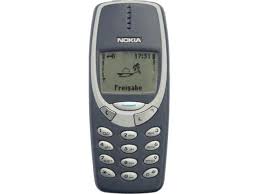
Happy 20th Birthday Nokia 3310!

Filed under: My Thoughts — Suramya @ 8:51 PM

The Nokia 3310 was launched on 1st Sept 2000 and is a legendary phone. Known for being nearly indestructible it helped accelerate the Mobile phone trend, with around 120 million devices sold during its lifespan. Both me and Surabhi had this phone and I have personal experience of its near indestructibility, Surabhi once took the phone on a roller coaster and midway through the phone fell out from her pocket (don’t ask me why she had the phone in the pocket as I don’t know). We assumed that the phone was a total loss and that we would have to get a new one. When the ride ended, we searched for the phone pieces and reassembled them. To all of our surprise the phone immediately booted up without any problems. There was a small crack on the battery panel but the phone worked without issues for another couple of years. Compare this to my S8 which had a cracked rear panel after falling from the bed.


The legendary Nokia 3310

“The Nokia 3310 is a true icon in the mobile phone world. Having sold over 120 million units its ubiquity meant that it is a device that many people owned, often as their first mobile phone. This means it generates a real sense of nostalgia which further underlines its status as one of the most important mobile phones of all time.

“The robust design made it almost indestructible in daily use and its ease of use meant that it became a firm favourite with customers. It is little surprise the design was rebooted in 2017 by HMD Global, the company that now licenses the Nokia brand for phones.”

The most recent 3310 version apes the aesthetic of the original well, although ditches some of its simplicity for a bevy of modern accoutrements, including a colour display and a 2MP rear camera.

I love my Samsung S10 but really miss the durability of the old cellphones.

– Suramya

September 1, 2020

Background radiation causes Integrity issues in Quantum Computers

Filed under: Computer Related,My Thoughts,Quantum Computing,Tech Related — Suramya @ 11:16 PM

As if Quantum Computing didn’t have enough issues preventing it from being a workable solution already, new research at MIT has found that ionizing radiation from environmental radioactive materials and cosmic rays can and does interfere with the integrity of quantum computers. The research has been published in Nature: Impact of ionizing radiation on superconducting qubit coherence.

Quantum computers are super powerful because their basic building blocks qubit (quantum bit) is able to simultaneously exist as 0 or 1 (Yes, it makes no sense which is why Eisenstein called it ‘spooky action at a distance’) allowing it process a magnitude more operations in parallel than the regular computing systems. Unfortunately it appears that these qubits are highly sensitive to their environment and even minor levels of radiation emitted by trace elements in concrete walls and cosmic rays can cause them to loose coherence corrupting the calculation/data, this is called decoherence. The longer we can avoid decoherence the more powerful/capable the quantum computer. We have made significant improvements in this over the past two decades, from maintaining it for less than one nanosecond in 1999 to around 200 microseconds today for the best-performing devices.

As per the study, the effect is serious enough to limit the performance to just a few milliseconds which is something we are expected to achieve in the next few years. The only way currently known to avoid this issue is to shield the computer which means putting these computers underground and surrounding it with a 2 ton wall of lead. Another possibility is to use something like a counter-wave of radiation to cancel the incoming radiation similar to how we do noise-canceling. But that is something which doesn’t exist today and will require significant technological breakthrough before it is feasible.

“Cosmic ray radiation is hard to get rid of,” Formaggio says. “It’s very penetrating, and goes right through everything like a jet stream. If you go underground, that gets less and less. It’s probably not necessary to build quantum computers deep underground, like neutrino experiments, but maybe deep basement facilities could probably get qubits operating at improved levels.”

“If we want to build an industry, we’d likely prefer to mitigate the effects of radiation above ground,” Oliver says. “We can think about designing qubits in a way that makes them ‘rad-hard,’ and less sensitive to quasiparticles, or design traps for quasiparticles so that even if they’re constantly being generated by radiation, they can flow away from the qubit. So it’s definitely not game-over, it’s just the next layer of the onion we need to address.”

Quantum Computing is a fascinating field but it really messes with your mind. So I am happy there are folks out there spending time trying to figure out how to get this amazing invention working and reliable enough to replace our existing Bit based computers.

Source: Cosmic rays can destabilize quantum computers, MIT study warns

– Suramya

August 30, 2020

How to write using inclusive language with the help of Microsoft Word

Filed under: Computer Software,Knowledgebase,My Thoughts,Tech Related — Suramya @ 11:59 PM

One of the key aspects of Inclusion is Inclusive language, and its very easy to use non-inclusive/gender specific language in our everyday writings. For example, when you meet a mixed gender group of people almost everyone will say something to the effect of ‘Hey Guys’. I was guilty of the same and it took a concentrated effort on my part to change my greeting to ‘Hey Folks’ and other similar changes. Its the same case with written communication and most people default to male gender focused writing. Recently I found out that Microsoft Office‘s correction tools, which most might associate with bad grammar or improper verb usage, secretly have options that help catch non-inclusive language, including gender and sexuality bias. So I wanted to share it with everyone.

Below are instructions on how to find & enable the settings:

  • Open MS Word
  • Click on File -> Options
  • Select ‘Proofing’ from the menu in the left corner and then scroll down on the right side to ‘Writing Style’ and click on the ‘Settings’ button.
  • Scroll down to the “Inclusiveness” section, select all of the checkboxes that you want Word to check for in your documents, and click the “OK” button. In some versions of Word you will need to scroll down to the ‘Inclusive Language’ section (its all the way near the bottom) and check the ‘Gender-Specific Language’ box instead.
  • Click Ok

It doesn’t sound like a big deal when you refer to someone by the wrong gender but trust me its a big deal. If you don’t believe me try addressing a group of men as ‘Hello Ladies’ and then wait for the reactions. If you can’t address a group of guys as ladies then you shouldn’t refer to a group of ladies as guys either. I think it is common courtesy and requires minimal effort over the long term (Initially things will feel a bit awkward but then you get used to it).

Well this is all for now. Will write more later.

– Suramya

August 29, 2020

You can be identified online based on your browsing history

Filed under: Computer Related,Computer Software,My Thoughts,Tech Related — Suramya @ 7:29 PM

Reliably Identifying people online is a bedrock of the million dollar advertising industry and as more and more users become privacy conscious browsers have been adding features to increase the user’s privacy and reduce the probability of them getting identified online. Users can be identified by Cookies, Super Cookies etc etc. Now there is a research paper (Replication: Why We Still Can’t Browse in Peace: On the Uniqueness and Reidentifiability of Web Browsing Histories) that claims to be able to identify users based on their browsing histories. It is built on top of previous research Why Johnny Can’t Browse in Peace: On the Uniqueness of Web Browsing History Patterns and re-validates the findings of the previous paper and builds on top of it.

We examine the threat to individuals’ privacy based on the feasibility of reidentifying users through distinctive profiles of their browsing history visible to websites and third parties. This work replicates and

extends the 2012 paper Why Johnny Can’t Browse in Peace: On the Uniqueness of Web Browsing History Patterns[48]. The original work demonstrated that browsing profiles are highly distinctive and stable.We reproduce those results and extend the original work to detail the privacy risk posed by the aggregation of browsing histories. Our dataset consists of two weeks of browsing data from ~52,000 Firefox users. Our work replicates the original paper’s core findings by identifying 48,919 distinct browsing profiles, of which 99% are unique. High uniqueness hold seven when histories are truncated to just 100 top sites. Wethen find that for users who visited 50 or more distinct do-mains in the two-week data collection period, ~50% can be reidentified using the top 10k sites. Reidentifiability rose to over 80% for users that browsed 150 or more distinct domains.Finally, we observe numerous third parties pervasive enough to gather web histories sufficient to leverage browsing history as an identifier.

Original paper

Olejnik, Castelluccia, and Janc [48] gathered data in a project aimed at educating users about privacy practices. For the analysis presented in [48] they used the CSS :vis-ited browser vulnerability [8] to determine whether various home pages were in a user’s browsing history. That is, they probed users’ browsers for 6,000 predefined “primary links” such as www.google.com and got a yes/no for whether that home page was in the user’s browsing history. A user may have visited that home page and then cleared their browsing history, in which case they would not register a hit. Additionally a user may have visited a subpage e.g. www.google.com/maps but not www.google.com in which case the probe for www.google.com would also not register a hit. The project website was open for an extended period of time and recorded profiles between January 2009 and May 2011 for 441,627 unique users, some of whom returned for multiple history tests, allowing the researchers to study the evolution of browser profiles as well. With this data, they examined the uniqueness of browsing histories.

This brings to mind a project that I saw a few years ago that would give you a list of websites from the top 1k websites that you had visited in the past using javascript and some script-fu. Unfortunately I can’t find the link to the site right now as I don’t remember the name and a generic search is returning random sites. If I find it I will post it here as it was quite interesting.

Well this is all for now. Will post more later.

– Suramya

August 28, 2020

Got my first bot response to a Tweet and some analysis on the potential Bot

Filed under: Humor,My Thoughts,Tech Related — Suramya @ 10:21 PM

Today I achieved a major milestone of being on the internet, 🙂 I finally had a bot/troll (potential) respond to one of my Tweets with the usual nonsense. Normally I would ignore but it was just so funny to see this response that I had to comment on it. The reply was to my Tweet about how we could potentially achieve our target of eradicating Tuberculosis by 2025 because of the masks we are wearing due to Covid-19. You see TB bacteria are spread through the air from one person to another and just like Covid TB bacteria are put into the air when a person with TB disease of the lungs or throat coughs, speaks, or sings infecting people nearby when they breathe in these bacteria. Now that wearing a mask is becoming the new normal in most parts of the world (except for some morons who don’t understand/believe science or believe that politics is stronger than science) there is a high chance that it will also reduce the spread of other illnesses spread through air.


My Tweet & the response to it

Once I saw the response, I clicked on the profile and scrolled through the posting history and saw that a majority of the posts (atleast for the amount I was able to stomach while scrolling down) were retweets of Anti-Masker, Covid denial, Pro-Trump, anti vaccine nonsense. As I needed a distraction I decided to spend a bit of time to try and identify if the account was just a stupid person or a clever bot and did a little bit of investigation on the account.

Looking at the account a couple of things stood out right from the start, the first was that the account was created in July 2020 and the username had a bunch of numbers in it which is usually the case for automatically created accounts. So I ran a query on the account via Botometer® by OSoMe which gave me a whole bunch of data on the account and there was a bunch of data that made it stand out as being a potential bot. In just over a month (5 weeks and a day to be exact) the account had tweeted 6,197 times and 2,000 times in just the past 7 days which equates to about 12 tweets every hour every day. The other data point that stood out was that the account tweeted at almost the same time every day which is usually indicative of a Bot.

Interestingly the Botometer does give the account a low possibility of being a fully automated bot but that could be just because the person running it is manually feeding the responses and having the system spray it out. Or it could be a bored person doing it for LOL’s, which is code for morons who don’t know better and think they are being ‘cool’ or ‘edgy’ or whatever. But if that’s the case then they really need to get a better hobby.

Well this is all for now. Wear a mask when you go out and stay safe.

– Suramya

PS: I have no paitience for the anti-masker/anti-vaccine/anti-science nonsense so will be deleting any comments/responses or making fun of the comments depending on my mood at the time.

August 25, 2020

Using Bioacoustic signatures for Identification & Authentication

We have all heard about Biometric scanners that identify folks using their fingerprints, or Iris scan or even the shape of their ear. Then we have lower accuracy authenticating systems like Face recognition, voice recognition etc. Individually they might not be 100% accurate but combine one or more of these and we have the ability to create systems that are harder to fool. This is not to say that these systems are fool proof because there are ways around each of the examples I mentioned above, our photos are everywhere and given a pic of high enough quality it is possible to create a replica of the face or iris or even finger prints.

Due to the above mentioned shortcomings, scientists are always on lookout for more ways to authenticate and identify people. Researchers from South Korean have found that the signature created when sound waves pass through humans are unique enough to be used to identify individuals. Their work, described in a study published on 4 October in the IEEE Transactions on Cybernetics, suggests this technique can identify a person with 97 percent accuracy.

“Modeling allowed us to infer what structures or material features of the human body actually differentiated people,” explains Joo Yong Sim, one of the ETRI researchers who conducted the study. “For example, we could see how the structure, size, and weight of the bones, as well as the stiffness of the joints, affect the bioacoustics spectrum.”

[…]

Notably, the researchers were concerned that the accuracy of this approach could diminish with time, since the human body constantly changes its cells, matrices, and fluid content. To account for this, they acquired the acoustic data of participants at three separate intervals, each 30 days apart.

“We were very surprised that people’s bioacoustics spectral pattern maintained well over time, despite the concern that the pattern would change greatly,” says Sim. “These results suggest that the bioacoustics signature reflects more anatomical features than changes in water, body temperature, or biomolecule concentration in blood that change from day to day.”

Interestingly, while the setup is not as accurate as Fingerprints or Iris scans it is still accurate enough to differentiate between two fingers of the same hand. If the waves required to generate the Bioacoustic signatures are validated to be safe for humans over long term use, then it is possible that we will soon see a broader implementation of this technology in places like airports, buses, public area’s etc to identify people automatically without having to do anything. If it can be made portable then it could be used to monitor protests, rallies, etc which would make it a privacy risk.

The problem with this tech is that it would be harder to fool without taking steps that would make you stand out like wearing a vest filled with liquid that changes your acoustic signature. Which is great when we are just talking about authentication/identification for access control but becomes a nightmare when we consider the surveillance aspect of usage.

Source: The Bioacoustic Signatures of Our Bodies Can Reveal Our Identities

– Suramya

« Newer PostsOlder Posts »

Powered by WordPress