Suramya's Blog : Welcome to my crazy life…

January 5, 2026

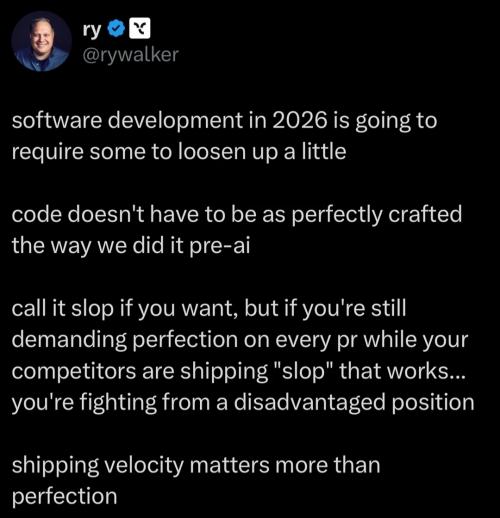
Wasted hours of my life due to Copilot and AI on Win 11 laptop

Over the weekend Jani asked me to take a look at her laptop because it was heating up quite a bit and the CPU fan was almost constantly running on high speed. So I took the laptop ran a bunch of virus scans and malware removal tools on it. Disabled a some programs that didn’t need to be running all the time (Adobe was a big one) but still the issue wasn’t solved.

After wasting about 3 hours of my life on this I remembered that she is using Windows 11 and that Copilot is enabled by default on all Win11 systems. So I went and disabled Copilot and almost immediately the CPU utilization dropped and the system stopped heating up so much. Then I disabled Copilot in all the Office tools (Word/Excel etc) and Notepad. I mean why on earth does Notepad need Copilot/AI? It is a plain text note taking software… it shouldn’t have any AI in it.

The amount of energy that is being wasted by ‘AI’ not just in data-centers but on laptops/desktops computers/phones etc is mind boggling. If it worked well it would still make some sense but it doesn’t. In fact it is almost comically bad to the point of being dangerous.

I used to update all the software on my systems almost on auto earlier but now have to look at each upgrade to see what is being added to the software. This is so I can avoid the AI crap that is getting added to all software. For example, Calibre which is one of the best software for organizing/converting e-books recently added an AI Chatbot to “Allow asking AI questions about any book in your calibre library.” This was almost universally condemned and the project forked to remove the AI related nonsense. Similarly other software have added AI to their setup without warning and it is exhausting to have to vet every single upgrade before pushing it out.

I am happy that I run Linux so I don’t have to deal with the nonsense that MS and other big companies have been pushing out in the name of AI.

– Suramya

January 2, 2026

Steganography: Hiding data in Document Files using color tags

Steganography is the art of hiding information within container files to conceal the existence of embedded information. Media files have been the most common containers for hiding embedded data due to which there is a lot of scrutiny on media files when they are transferred. Most of the DLP (Data Leak Prevention) system focus on media files when checking for steganography. Word documents on the other hand are common enough that they can be used as containers for hidden information without raising flags.

In this paper we explore hiding secret data in a Word document by inserting multiple color tags into the file that alter the color for each character in the document to encode data without changing the visual look of the document.

Modern DLP systems can detect hidden information in media files such as images, videos or audio files by performing analysis of files to detect modification and potentially identify the hidden data. In order to be able to send data without detection a new method of hiding data needs to be found. In this paper we look at how to hide text in a word document by modifying the color tags in the word document. This allows us to exfiltrate data using word files with a minimal risk of detection using existing tools.

Introduction and History

Steganography is the art of hiding data or a message inside another file or object. This object can be an image, text, audio or video file. The word has Greek roots, and is a combination of steganos (“concealed, protected”) and graphy (“writing.”).

The first known use of steganography was in ancient Greece around 440 B.C, where the Greek ruler Histaeus would shave the head of a slave and tattoo a secret message on the slave’s scalp. After which he would wait for their hair to grow to hide the secret message and send the slave to the recipient who would then shave the head to get the message. (UK Essays, 2021) Another example from the same time period is when Demaratus sent a warning about a forthcoming attack to Greece by carving the message on the wood of a wax tablet before covering it with a fresh wax coat. This tablet that looked blank was delivered to Greece along with other blank tablets, where the Greeks removed the wax layer to read the hidden message. (Perera, 2011)

In more modern times, Steganography was used during the second world war by the Germans who used Microdots to reduce complete documents to the size of a dot which was then placed on a normal looking letter or document. Another technique used often was to encode messages in knitted scarves or sweaters sent to operatives. Every knitted garment is made of different combinations of just two stitches: a knit stitch, which is smooth and looks like a “v”, and a purl stitch, which looks like a horizontal line or a little bump. By making a specific combination of knits and purls in a predetermined pattern, spies could pass on a custom piece of fabric and read the secret message. (Zarrelli, 2021)
With the Digital age, the options to encode messages in digital files became available and steganography evolved to make use of the new medium.

How Digital Steganography works

Most digital files contain sections that can be altered without showing any obvious effects in the file. Modern techniques hide data in files by using one of the following approaches:

Adding bits to a file:

In this approach the hidden text is added to the “file header”, which usually contains information such as the file type or the resolution and color depth of a photo. This method is relatively easy to detect if we look at the file size difference. For example, if we add 1 MB of secret data to a 4 MB file, the output file size would increase by 1MB making it easy to detect if the resultant file was compared with the original.

Changing the Least Significant Bit (LSB):

To resolve this problem of changing file size, a new technique was created that makes use of the fact that the LSB’s in a file can be altered without significantly altering the source i.e. if the container was an image the altered image would look the same to human eyes. As an example, in an image file each pixel is comprised of three bytes of data corresponding to the colors red, green, and blue. LSB steganography changes the last bit of each of those bytes to hide one bit of data. Which allows a user to hide data in the file without changing the file size. The same technique can be applied to other media files such as Video or Audio files as well.

The larger the container file, the more data can be encoded into the file, which is why use of Images, Video and audio files is very popular with Steganographic users, as it allows the user to hide large quantities of data in a single file. The major limitation of using media files is that if the target doesn’t usually send or receive media files, then it is a break in the routine if they start suddenly sending or receiving such files.

Word Documents or Text files on the other hand are the bread and butter of all organizations and every user sends and receives a lot of documents throughout the course of the day. So, if we are able to hide data in a word file, then it would be easier to exfiltrate the data.

How to hide data in a text file

There are a lot of options available for use to hide information in a text file and some of them have been used historically for this purpose already, the digital text just gives us a new medium for the hidden text. Some of the options are as below:

Using patterns of letters within word

In this technique the user would send a normal looking message or document to another user. They would hide a secret message in the file by encoding a message that can only be read by taking the ith letter of each word in the message. The advantage is that you can send a lot of data using this technique, but the disadvantage is that the message can end up sounding very stilted because of the requirements of the steganography.

Using the Whitespace in the document to hide data

Another option is to use the spacing differences in the file to encode a message. One example is for the sender to put in one space after a full stop to mean 0 and two spaces after it to represent a 1. By looking at the spacing the secret message can be spelled out. The main problem with this approach is that it does not allow large quantity of data to be sent in a file, but the advantage is that it is harder to detect.

In this paper we are looking at a third way to hide data in a document by modifying the color tags in the document and we will look at this in more detail in the next section.

Hiding information using color tags in a Word Document

All versions of MS Office since 2007 save files in the Microsoft Office Open XML specification which are then zipped to create files in the DOCX format. Word files allow a user to show text in multiple colors by inserting the corresponding color tag into the file. (Microsoft, 2021) When the color of the displayed text is modified to a different color, the system adds a tag in the document.xml file located in the zip file like the following: <w:color w:val=”000000″/> to show the change in font color. The tag shows the color of the text in a Hex format, with 00 as Black and FF showing White color.

Each of the pair of bits in the color tag corresponds to the Red, Green or Blue color pallet. In each pair, the second bit is the least significant bit and its value can be modified without the output color looking significantly different to the viewer. So, visually speaking the font color represented by Hex value 000000 looks almost exactly the same as color represented by the Hex value of 010101. By altering the value of the second bit in the pair from 0 to 1 or vice versa information can be encoded into the file without adding text or information that can be found by security systems/reviewers. Since the data is in XML format, the sender can insert data into the document by inserting color tags into the document for each character. The process to hide the data would look like the following:

  • The user provides a word file to be used as an input. The file would contain sufficient text to allow the sender to encode data.
  • The system extracts the contents of the documents from the file by unzipping it.
  • The content of the document is stored in the ‘documents.xml’ file under the word folder created in the previous step.
  • The system extracts the text from the file by striping the XML tags from the file
  • For each character in the text, it adds a color tag such as or . The second bit in the pair is set to a 0 or a 1 depending on the data being encoded.
  • The original tags are restored to the file along with the new tags created.
  • The resulting file is saved as document.xml in the word folder
  • The folder is compressed as a ZIP file and renamed to .docx

The resultant file will contain the hidden data with little visual indication of the changes being made to the document and can be mailed our as usual with little chance of detection.

The recipient would follow these steps to extract the hidden data from the file:

  • Unzip the document to extract the content
  • Extract all the color font tags in the file
  • Read the second bit in every pair of color code
  • Save the values in a separate file that contains the secret information.
  • Review the information at your leisure.

This technique is fairly easy to implement with minimal coding skills required. If the setup doesn’t allow users to send out word documents, then the same technique can also be used to hide data in the html source of a website that the recipient would then download and extract. The same can also be accomplished by encoding data in emails sent from the user’s account.

Detection Techniques for hidden data in documents

Like any techniques to send hidden data the technique we just discussed has its weaknesses which can be used to detect hidden messages encoded in the document. However, such detection is not easy and most of the currently available tools will not be able to detect data hidden using this technique. This is because most commercial tools available in the market focus their efforts to detect hidden data with media files such as images, videos or audio files as they have traditionally been the most common containers used to hide data. Some of the options available to detect the possibility of hidden data are as follows:

  • Create a tool that examines all documents sent out to count the number of font tags in use in the document. If the count of the tags is over a certain threshold the file can be quarantined for review by a human
  • Use a tool checks the size a given document is expected to be based on the amount of text in the document. If the size of the file is significantly higher (due to anomalously high number of tags in the file) the file can be quarantined for review.
    • We would need to take into account any images etc embedded in the file when performing the analysis
  • Create a machine learning tool that uses AI/ML to detect files with hidden data.

Conclusion

Any data or file being sent outside the organizations network can be used to exfiltrate information from the network. The trick to detecting these attempts is to create a baseline of the activity, data sizes of the files transferred during a regular day and create alerts to notify administrators when there is a significant variation from the baseline.

Done correctly this will decrease the risk of data exfiltration but no technique to detect data is perfect so a lot of review and audits need to be done on a periodic basis to ensure that the system is still secure.

References

Microsoft. (2021, August 25). File format reference for word, Excel, and PowerPoint. Deploy Office | Microsoft Docs. Retrieved September 19, 2021, from https://docs.microsoft.com/en-us/deployoffice/compat/office-file-format-reference.
Perera, H. L. (2011, February 4). History of steganography. hareenlaks. Retrieved September 19, 2021, from http://hareenlaks.blogspot.com/2011/04/history-of-steganography.html.
UK Essays. (2021, August 12). The history & background of steganography. UK Essays. Retrieved September 19, 2021, from https://www.ukessays.com/essays/english-language/background-of-steganography.php.
Zarrelli, N. (2021, June 10). The wartime spies who used knitting as an espionage tool. Atlas Obscura. Retrieved September 19, 2021, from https://www.atlasobscura.com/articles/knitting-spies-wwi-wwii.


Note: This was originally written as a paper for one of my classes at EC-Council University in Q3 2021.

– Suramya
January 1, 2026

Happy New Year!

Filed under: My Thoughts — Suramya @ 9:46 PM

Earth has successfully completed one more revolution around the sun and to celebrate that here’s a Sanskrit verse (With a Hindi & English translation under it):

सूर्य संवेदना पुष्पे, दीप्ति कारुण्यगंधने। लब्ध्वा शुभं नववर्षेऽस्मिन कुर्यात्सर्वस्य मंगलम्॥

हिंदी अर्थ: जैसे सूर्य प्रकाश देता है, संवेदना करुणा उत्पन्न करती है और फूल सुगंध बिखेरता है, वैसे यह नया वर्ष सभी के लिए मंगलमय हो।

Translation: Like the sun gives light (life), sympathy gives birth to compassion and like flowers spread perfume, may the new year be auspicious for everyone!.

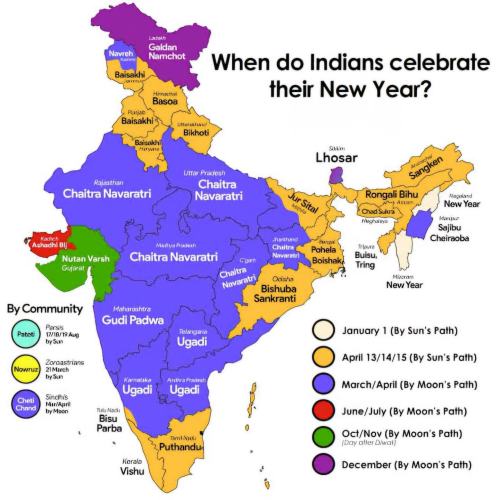
Interestingly this (Jan 1st) is not when most of India historically celebrates new year. The map below shows the traditional dates when various states in India celebrate New Year:

When do Indians celebrate their New Year
When do Indians celebrate their New Year?

Looking at the map it is clear that most of the country celebrates it in March/April (depending on the Moon’s path) with April 13/14/15 the second most common date. It shows how diverse India is and that is the best part of being in India. Imagine getting to celebrate “New Years” multiple times a year with the excuse to celebrate. What’s not to like about it?

I am probably going to do a post about 2025 in the next few days depending on my mood and energy levels.

– Suramya

December 31, 2025

82nd Anniversary of Netaji hoisting the Tricolour for the first time on the Indian Soil at Port Blair in Andaman and Nicobar Islands

Filed under: My Thoughts — Suramya @ 12:01 AM

India owes a lot to Netaji Subhas Chandra Bose because without his Ajad Hind Fauj India would not have gotten its independence from the British. It was only when the Ajad Hind Fauj started making its way from the north-east India towards Delhi & Calcutta did the British finally agree to leave India.

His freedom struggle was years in making and on 30th Dec 1943, Netaji hoisted the Tricolour for the first time on the Indian Soil in Port Blair at the Andaman and Nicobar Islands declaring the Islands as the first Indian Territory to be freed from the colonial rule.

According to the Government of India, Netaji Subhash Chandra Bose had visited the South Andaman district in 1943. On December 30, 1943, Netaji Subhash Chandra Bose, the Commander of the Azad Hind Fauj or the Indian National Army (INA), hoisted the Indian National Flag for the first time on the soil of Port Blair.

This historic event occurred after his escape from British surveillance on January 16, 1941, when he entered Indian soil. The flag hoisting symbolised the realisation of his promise that the Indian National Army would set foot on Indian soil by the end of 1943. This also marked a declaration of the Andaman and Nicobar Islands as the “first liberated territory of India”.

Now every year on 30th December a function is organized at Flag Point commemorating the first flag hoisting by Netaji. Without the struggle and sacrifice of these brave men and women India would not have won its independence and we owe it to them to ensure that their sacrifice and hard-work is not whitewashed and gaslit out of our history books. While I was writing this post I remembered this old Hindi song which is completely apt so sharing it here.

ये देश है वीर जवानों का
अलबेलों का मस्तानों का
इस देश का यारो क्या कहना
ये देश है दुनिया का गहना

यहाँ चौड़ी छाती वीरों की
यहाँ भोली शक्लें हीरों की
यहाँ गाते हैं राँझे मस्ती में
मचती हैं धूमें बस्ती में

पेड़ों पे बहारें झूलों की
राहों में क़तारें फूलों की
यहाँ हँसता है सावन बालों में
खिलती हैं कलियाँ गालों में

कहीं दंगल शोख़ जवानों के
कहीं कर्तब तीर कमानों के
यहाँ नित नित मेले सजते हैं
नित ढोल और ताशे बजते हैं

दिलबर के लिए दिलदार हैं हम
दुश्मन के लिए तलवार हैं हम

मैदाँ में अगर हम डट जाएँ
मुश्किल है कि पीछे हट जाएँ

A very rough Translation:

This country has brave young men who are carefree
Friends, this country
Friends, this country is great
This country is an ornament of the world

Here the courageous people have a brave heart
Here the women have an innocent face
Here the lovers sing
Here the lovers sing in joy
There are gatherings in the colony

There are swings of spring on the trees
There are flowers lined up in the paths
Here the rainy season smiles
Here the rainy season smiles in the tresses
The flowers blossom on the cheeks

Somewhere the young are wrestling
Somewhere there’s a talent show of archery
Here there are carnivals
Here there are carnivals adorned all around
Where the drums and music are playing

I’m a lover for my beloved
I’m a sword for my enemy
If I step my foot on the battlefield
Then it’s impossible to turn me back

It is good to see India taking back its seat at the world stage and leading it towards a better future. (Yes there are issues that need to be solved but while we are working on that we do need to celebrate our progress as well)

– Suramya

December 30, 2025

Indian Railways Electrification at 99.2% complete as of 30th Nov 2025

Filed under: My Thoughts,News/Articles — Tags: — Suramya @ 5:17 PM

The more we move away from Fossil fuels the better it is for the environment and as part of that effort the Indian Government has been aggressively pushing for electrification of the tracks. As of 30th Nov 2025, we have electrified 99.2% of the tracks in India putting India at No. 2 in the world after Switzerland which is the only country in the world that has achieved 100% electrification.

Indian Railways go almost fully electric with 99.2% of tracks electrified
Indian Railways go almost fully electric with 99.2% of tracks electrified.

In 2014 only 21,801 km of tracks in India were Electrified. As of 30th Nov 2025 after a multi-year sustained effort 69,427 km of track out of 70,001 km have been successfully electrified. This leaves only 574 km remaining all of which are currently in the process of getting electrified. The following lists the tracks that are yet to be electrified:

Rajasthan: 93km out of 6,514
Tamil Nadu: 117km out of 3,920
Karnataka: 151km out of 3,742
Assam: 197km out of 2,578
Goa: 16km out of 187

My guess is that by mid-2026 we will have achieved 100% coverage.

Source: Indian Railways: Status of Railway Electrification as on 30.11.2025

– Suramya

December 25, 2025

Bad Idea no 2323546: Chat with AI Version of Ex to ‘get over them’

Filed under: Artificial Intelligence,My Thoughts,Tech Related — Tags: — Suramya @ 9:56 PM

I am making yet another post about AI and again not in a good way. The AI we want is something like Cortana from the Halo games, Chappie from Forbidden Planet or Data in Star Trek: The Next Generation. What we have instead is a scholastic parrot that can’t answer basic questions and is more of a plagiarism machine than AI. The scary part is that people are pushing it as the cure for everything and anything. In doing that they want people to stop talking to other people and instead talk to a machine instead. This is bad for all sorts of reasons and has been causing irreparable harm to the world and the way we think of other people.

Loosing someone either because they passed away or because they left you can be hard and it takes time to get over the loss. There are folks who have a hard time with this especially when the relationship was troubled/complicated and that is why Psychiatrists are there to help you get over this loss, another option is to be with friends and family who will help you with the ups and downs.

But now the Techbros have decided that they know better than anyone what is good for the people ’cause they are not people who have friends and a lot of times think of people as interchangeable parts… Elon Musk famously calls people who don’t agree with him or who he doesn’t like NPC’s which is a gaming term for Non Player Characters controlled by the game’s AI i.e. not real. So it is not surprising they have come up with the following abomination:

Chat with their AI-version of your ex. Thinking about your ex 24/7? There's nothing wrong with you. Chat with their AI version and finally let it go.
Chat with their AI-version of your ex. Thinking about your ex 24/7? There’s nothing wrong with you. Chat with their AI version and finally let it go. closure.ink

I found this in my feed and went to their site to learn more (not linking to it because this site doesn’t deserve any more traffic.) and below is their explanation of how things work:

AI-chats with those who disappeared
Chat with the AI version of the person who ghosted you. Get your answers. Regain your strength – and move on.

How It Works
1. Select Who Ghosted You. Choose the type of person who ghosted you – a friend, date partner, recruiter, or long-term partner.
2. Tell Your Story. Share details about your relationship and what happened to help our AI understand your situation.
3. Chat for Closure

Our AI plays role of the person ghosting you. Express your anger, get your answers, and find your closure.

The page is right about the fact that you need to talk about your feelings to someone when you have been Ghosted (or lose someone) but talking to ‘AI’ is not the answer. In fact it can actually make things worse. In Nov 2025, a college graduate who was feeling down shared his feelings with ChatGPT because it was his closest confidant and ChatGPT encouraged him to kill himself as per a lawsuit filed against ChatGPT. More details on the case is documented on this Wikipedia page. This wasn’t the only case where chatbots encouraged/made the situation worse when people who are in a fragile state reached out for help. An incomplete list of Deaths linked to chatbots is available on Wikipedia and multiple mental health professionals have raised concerns about this epidemic which is only going to get worse because of the Hype machine pushing AI as a solution for all ills.

Humans are social animals and need to talk to others. Others might not agree with you 100% of the time but will give you an alternate view that you might not have thought about on your own. It is good for us to have people who challenge our views and thoughts. Otherwise we end up thinking we know everything about everything and end up in situations that could have been avoided if someone had challenged us earlier. Elon Musk is infamous for this, as most of his ideas don’t really work but everyone around him keeps calling him a genius who can do no wrong so we end up with rockets exploding and damaged launch pads because Musk overrode the engineers about the construction. There are countless other examples of this.

I do understand that there are folks who don’t have a good support system around them for various reasons and they should take even more care when interacting with AI as a support system. They can try to chat with online friends, professional psychiatrists, organized groups etc. For example, on Mastodon has a tag that you can follow to have a friendly chat with people on any topic:

Fedi.Tips 🎄@FediTips:

Reminder that if you’re wanting to have a friendly chat with people about everyday things, perhaps Christmas-related or perhaps not, there’s a tag for this at:

➡️

You can talk about what you’re doing or enjoying today. Music, food, television, books, the weather… anything 🙂

It’s meant to connect people who want to have friendly discussions. Everyone is welcome to use it, but it’s especially meant to help people who are a bit isolated for whatever reason.

There are similar other resources available for people who need it including phone lines that you can call for help or just to vent.

To get you over someone, it really helps if you divert your mind by doing something else such as starting a new hobby, activity or changing your daily routine. I started Trekking to meet new people and ended up meeting my wife on a trek. Go out explore the world, you will have a better experience and get more support than what you can ever get from a ‘spicy autocomplete.’

– Suramya

December 24, 2025

Dhurandhar: A fantastic way to cap 2025 for the Indian Cinema

Filed under: My Thoughts — Suramya @ 6:53 PM

Over the past few years its been a running joke between Jani and me that I don’t watch Indian movies. In fact even my friends used to ask why I didn’t go for Hindi movies (South-Indian movies came into picture after I moved to Bangalore) even when they were super-hit movies and my answer used to be the same, I don’t find them at all interesting or funny. They repeat the same formula for every movie (boy meets girl, falls in love… maybe some action or comedy and then Boy wins girl. Thank you for coming) and I didn’t find it interesting at all.

But all that has changed in the last 2 years or so, with Indian cinema coming up with some spectacular movies that go beyond the tired old formula. We had movies like Tumbaad (that I saw earlier this year), Stree, Bhediya and others in the Madock Horror universe. Then came some of the other movies that covered real incidents and activities (Article 370, URI, Kashmir Files, RRR, Bengal files etc etc). Others showcased movies based on India’s vibrant mythological and religious past and guess what they were awesome and I loved all of them. I saw a lot of them in the theaters, others at home on OTT and I am quite happy with the selection of choices that we are now getting.

This post was inspired in part by the push back Dhurandhar is getting on social media even though the audiences love the movie. I saw it last week and I loved it. The movie is extremely violent and that is by design. It shows how inhumane these terrorists are and imagine how much worse they are in real life because a movie can’t show all the things they do such as torture and kill to achieve their aims. People are calling the movie anti-Islam and I was expecting the movie to be a lot more anti-muslim, but it doesn’t even go there. All it does is show how Pakistan and their criminal underground has consistently supported terrorists. It starkly shows how inhumane these attackers are and how bravely our forces have been fighting against them (even when they are handicapped due to external pressures)

It shakes you to the core when you see the re-enactment of the Indian Parliament attack and the 26/11 Mumbai attacks. I have lived through those attacks just as I was in the US in New York during the 9/11 attack. Mom was planning to be in the Parliament that day but had canceled her plan for some reason. My Uncle was part of the NSG commandos who responded to the Mumbai attacks. Reliving that memory and hearing the actual phone conversation between the terrorists and their handlers was spine chilling. People are calling it a propaganda movie because it shows what we went through and how ineffectual our response was to these attacks. The movie rightly calls this out with one of the attackers saying “Hahne socha tha after the attack India kuch bada karega but wo to US se bheek mangta raha or kar kuch nahi paya” (We thought India will react in a big way after the (Mumbai) attack but they kept begging US to respond and couldn’t do anything). You have no idea how upset the common man was with our lack of response to the attack. The movie shows that. Yes, it is a violent movie but guess what, so was Game of Thrones and almost every John Wick movie. Why no protests against them?

The acting, the music, the story build up everything is so well done that it is hard to say which was the best part. I loved the use of old 80’s & 90’s music in the movie set to the action scenes. It not just tells the story of how Hamza infiltrates the gang and takes over but it also shows the emotional and mental toll the whole thing takes on him. From a small tear in his eye when he is forced to eat meat to survive to the absolute soul-shattering pain in his eye when they are watching the Mumbai attack live and celebrating. He has to celebrate with them so as not to out himself but his eyes show the pain he is going through. Part I sets the stage for the next installment where these gangs are now unified and how they will be taken down. I for one am eagerly waiting for it.

It’s past time we show the world what we have been going through because of these attacks sponsored and paid for by Pakistan and other terror states. In the new India we are showing the world what they did and are responding to it as well. Gone are the days of meekly showing the other cheek now as they said in the movie “यह नया भारत है, यह घर में घुसेगा भी और मारेगा भी” (This is the new India, we will enter your house and kill/beat you as well… (if attacked) ). Sri Krishna said in the Gita: “Always be first in seeking peace, but ultimately standing up for righteousness (Dharma) and justice when all peaceful options fail is your Dharma (duty).”. We will not attack first, but if others attack India then they will be hit back as shown by the Surgical strikes and Operation Sindoor.

The other major advantage of such movies is that it counters the narrative that is being set by folks about the attacks, India’s history/past achievements and how things happened. If no one says anything then that narrative is accepted as the truth and we lose a portion of our history. For example, the so called ‘Arabic’ numerals were discovered/invented in India but because the Arabs told everyone they invented it and India didn’t counter the claim they are now known world wide as the Arabic Numerals.

There are countless other such stories that we lost because no one told them. I am happy that the Indian Cinema is now showing such stories. I have been meaning to write a blog post where I discuss why Indian kids know more about the Greek/Roman Gods than the Indian Gods? This is because they are constantly exposed to stories about the Greek/Roman Gods but when movies/shows talk about Indian Gods there are plenty of folks who will jump on them to say that they are outdated/superstitious etc etc.

Thankfully the producers & directors have realized that we need to tell our stories before they are lost for ever and more movies based on Indian folklore, mythology, history are coming out such as: Kalki which is Based on the story of Vishnu’s 10th Avatar who is supposed to end the Kal Yuga. Then we also have ‘Kantara: A Legend’ which is based on Karnataka’ regional folklore. Thamma is based on the mythological Vetala which is a vampire like creature going back centuries before the western world ‘invented’ the Vampire. There are multiple great movies that I saw in the last year.

I think I will do a separate post to talk about these movies that I saw & liked (and some that I didn’t like).

Well this is all for now. Will write more later.

– Suramya

PS: If you have not seen Dhurandhar yet go watch it (If you can get tickets as most shows are still sold out)

December 12, 2025

30th anniversary of Warcraft II, One of my all time favorite games

Filed under: My Thoughts,Tech Related — Suramya @ 10:31 AM

Warcraft II is one of my all time favorite games along with Diablo (I, II & III). Warcraft II was released on December 9, 1995 and I first played it in 1997/98. Even though I am not a gamer I spent way too many all-nighters playing the game. Warcraft III was released a few years later but for some reason I never really got into it much, even now I have the game installed on my machine though its been a while since I last played it. But maybe this is a good excuse to try it out again. 🙂

If you have not played it, you should definitely check it out. I bought both Warcraft I & Warcraft II along with a whole bunch of other Blizzard games from GoG where they were part of the GOG Preservation Program but unfortunately because of various reasons they were delisted from the GoG store a year ago. Thankfully because of their effort the installer works offline without any issues. The game is still available for sale directly from Blizzard but that requires an account with them.

In Warcraft II, as in many RTS games, players collect resources to produce buildings and units to defeat an opponent in combat. Players gain access to more advanced units upon construction of tech buildings and research. The majority of the display screen shows the part of the territory on which the player is currently operating, and, using the small mini-map, the player can select another location to view and operate on. The fog of war completely hides all territory (appears black) which the player has not explored: terrain that has been explored is always visible in gray tones, but enemy units remain visible only so long as they stay within a friendly unit’s visual radius. Buildings remain displayed as the player last saw them, and do not register unobserved changes such as being built, damaged, or repaired, etc.

Interestingly, this is one of the few games that I am able to run on my Linux machine without any issues. I know Stream allows you to play games on Linux, but I am not enough of a gamer to spend the minimal effort to install and configure it. Thanks to Crossover by Codeweavers, the game works out of the box on my Debian system.

On a side note, Crossover is a fantastic piece of software which allows you to run most Windows software on Linux seamlessly. (The team keeps adding support for the ones that are not yet supported fully). All the Windows software that I need is installed on my Linux machine using Crossover and the best part is that I don’t need to have a separate Windows install in a VM or anything for this to work. Check out the Software Compatibility list published by Codeweavers to see if the software you use is supported or not. It is a paid software but one that I am happy to pay for (If you don’t renew your subscription you lose access to the dedicated support and new releases but your existing installs continue to work fine.)

Source: HackerNews: 30 Year Anniversary of WarCraft II: Tides of Darkness

– Suramya

December 11, 2025

Remotely accessible platform for biocomputing research using Lab-Grown Human Neurons

Filed under: Emerging Tech,My Thoughts,Science Related,Tech Related — Suramya @ 9:33 AM

Biocomputing is the term given to the effort to create a computer based on biological parts or biologically derived molecules such as DNA and/or proteins to function as a computer. It is an evolving field with a huge potential that is aiming to create a computer similar to the human brain which is a phenomenally powerful machine. As per some of the research that I found, the human brain can apparently process 11 Terabytes of information per second and store about 2.5 petabytes (2.5 million gigabytes) of data. Another advantage of a biological computer is that it is relatively easier to power and can be powered by something as simple as glucose mixed in water that is converted to energy by the cells. This would allow the system to become independent of unreliable power sources and the advantages of that are limitless.

Researchers have been working on Bio Computers for more than 30 years now, I first wrote about them back in early 2000’s. They are still in early stages where they can play games such as Pong.

A Swiss startup FinalSpark is taking this to the next level and have successfully grown human neurons from stem cells which are then connected to electrode arrays allowing them to be accessed over the internet. This platform is called Neuroplatform and supports both electrical and chemical stimulation methods. Users can programmatically trigger neurotransmitters like dopamine, glutamate, and serotonin through a Python-based stimulation API. Neuroplatform is used by multiple universities, such as the University of Michigan, Free University of Berlin, University of Exeter, Lancaster University Leipzig, University of York etc.

Wetware computing and organoid intelligence is an emerging research field at the intersection of electrophysiology and artificial intelligence. The core concept involves using living neurons to perform computations, similar to how Artificial Neural Networks (ANNs) are used today. However, unlike ANNs, where updating digital tensors (weights) can instantly modify network responses, entirely new methods must be developed for neural networks using biological neurons. Discovering these methods is challenging and requires a system capable of conducting numerous experiments, ideally accessible to researchers worldwide. For this reason, we developed a hardware and software system that allows for electrophysiological experiments on an unmatched scale. The Neuroplatform enables researchers to run experiments on neural organoids with a lifetime of even more than 100 days. To do so, we streamlined the experimental process to quickly produce new organoids, monitor action potentials 24/7, and provide electrical stimulations. We also designed a microfluidic system that allows for fully automated medium flow and change, thus reducing the disruptions by physical interventions in the incubator and ensuring stable environmental conditions. Over the past three years, the Neuroplatform was utilized with over 1,000 brain organoids, enabling the collection of more than 18 terabytes of data. A dedicated Application Programming Interface (API) has been developed to conduct remote research directly via our Python library or using interactive compute such as Jupyter Notebooks. In addition to electrophysiological operations, our API also controls pumps, digital cameras and UV lights for molecule uncaging. This allows for the execution of complex 24/7 experiments, including closed-loop strategies and processing using the latest deep learning or reinforcement learning libraries. Furthermore, the infrastructure supports entirely remote use. Currently in 2024, the system is freely available for research purposes, and numerous research groups have begun using it for their experiments. This article outlines the system’s architecture and provides specific examples of experiments and results.

FinalSpark has also released the code related to Neuroplatform as Opensource on GitHub.

Am excited to see what folks come up with on this platform.

Source: itsfoss.com: This Company Uses Lab-Grown Human Neurons for Energy-efficient Computing

– Suramya

December 9, 2025

Security vs Accessibility: Thoughts on the problem and how it can be addressed

Security is something that always comes at an expense of Usability and I wrote about this earlier as well. However, in this post I am going to talk about something slightly different: How security measures impact accessibility. At first glance it might look that both topics are the same but there are extra nuances in the Accessibility that unfortunately are not considered a lot of the time when we design a system. To be honest I didn’t think about it much either until I saw a post by James on Mastodon highlighting the issue:

https://mastodon.social/@jscholes@dragonscave.space/115673620717345529
Security measures impacting Accessibility for blind users

A severe issue I’ve seen very few people talking about is the widespread adoption (in my country at least) of touch-only card payment terminals with no physical number buttons.

Not only do these devices offer no tactile affordances, but the on-screen numbers move around to limit the chances of a customer’s PIN number being captured by bad actors. In turn, this makes it impossible to create any kind of physical overlay (which itself would be a hacky solution at best).

When faced with such a terminal, blind people have only a few ways to proceed:

* Switch to cash (if they have it);
* refuse to pay via inaccessible means;
* ask the seller to split the transaction into several to facilitate multiple contactless payments (assuming contactless is available);
* switch to something like Apple Pay (again assuming availability); or
* hand over their PIN to a complete stranger.

Not one of these solutions is without problems.

If you’re , have you encountered this situation, and if so how did you deal with it? It’s not uncommon for me to run into it several times per day.

why do you think this is not being talked about or made the subject of action by blindness organisations? Is it the case that it disproportionately affects people in countries where alternative payment technology (like paying via a smart watch) is slower to roll out and economically out of reach for residents?

It is easy to forget that others have different requirements and needs than you and navigating a world which is moving towards removing tactile feedback makes it harder for people with vision problems or motor control issues from interacting with the world. Every single security feature that we add to a system the more the potential of making the system inaccessible increases. For example, if we have captcha checks while logging into a site or a computer then screen readers can’t read the captcha by design so blind users are unable to log in to the system. A fix for that was to have audible captcha code but with the advances in voice recognition an attacker can use a voice recognition system to identify the code and bypass the security measure.

Accessibility features / functionality seems to be an afterthought (if that) for developers even in 2025. There are major accessibility issues in Linux and Fireborn (Couldn’t find their real name) did a whole series of blog post’s about the issues they face as a blind person using Linux (I Want to Love Linux. It Doesn’t Love Me Back: Post 1 – Built for Control, But Not for People) on a day to day basis. The sad part is that while a lot of people acknowledged the issue and agreed to work on fixing it there were the usual gatekeepers who wrote nasty/condescending messages in response to the post, Fireborn responded to the comment quite beautifully (and a lot more politely than I would have in their position) in another blog post (You Don’t Own the Word “Freedom”: A Full-Burn Response to the GNU/Linux Comment That Tried to Gatekeep Me Off My Own Machine) This right here is the issue that we need to solve. People don’t think we need to work on accessibility because they don’t need it. I remember reading an article about how there was a group of people really upset because a streaming solution was giving more focus on subtitles for their shows. No one is forcing you to enable subtitles but folks who don’t speak the language or have hearing issues they are a lifesaver.

Coming back to the security & accessibility issue for a POS (Point of Sales system), there is no easy way to solve this problem for card users. One option I can think of is for stores to keep a physical bluetooth pin-pad that is paired with the POS machine so that users with vision problems can use the physical keyboard to enter the pin. This would require effort (and have a cost implication) from the store so I don’t know how many stores will do that. It would work if there was a law that required the store to do this but if that is not there then the users are lost.

Another option would be to have a screen/image reader application on a phone that the user (or store) owns that scans the display and then reads out the numbers displayed. Even better functionality would be to have the app detect which number is covered by the user’s finger and let the user know verbally (over a headset ideally) so that they can enter the numbers.

These are some of the ways that I can think of to solve this problem but since I am not the target user a better way to approach this issue would be to work with folks with vision problems and have them confirm if the solution we are coming up is actually solving their problem or not.

– Suramya

« Newer PostsOlder Posts »

Powered by WordPress